

Introduction
If you have ever dreamed of stepping outside and harvesting fresh, sun-ripened tomatoes or crisp lettuce for your dinner salad, learning how to grow vegetables at home is one of the most rewarding hobbies you can start. There is nothing quite like the taste of produce you have nurtured yourself from seed to harvest.
Many people are intimidated by gardening, thinking they need a massive backyard or a “green thumb” to succeed. The truth is, you can grow a surprising amount of food in small spaces, pots on a balcony, or even a sunny windowsill.This comprehensive guide will walk you through the essential steps of how to grow vegetables at home, breaking down the process into manageable tasks so you can start your garden with confidence.
Step 1: Choose the Right Location

The single most important factor in learning how to grow vegetables at home is sunlight. Most vegetable plants are sun-lovers.
Sunlight Requirements: Aim for a spot that receives at least 6-8 hours of direct sunlight per day. Leafy greens like lettuce and spinach can tolerate some partial shade, but fruiting plants like tomatoes, peppers, and squash need full sun to produce well.
Water Access: Make sure your garden is near a water source. Hauling buckets of water across the yard gets old fast. A nearby hose spigot will make daily watering much easier.
Step 2: Decide on Your Garden Type
Depending on your space and soil, you have a few options for how to grow vegetables at home. The method you choose will depend on your available space, budget, and physical ability.
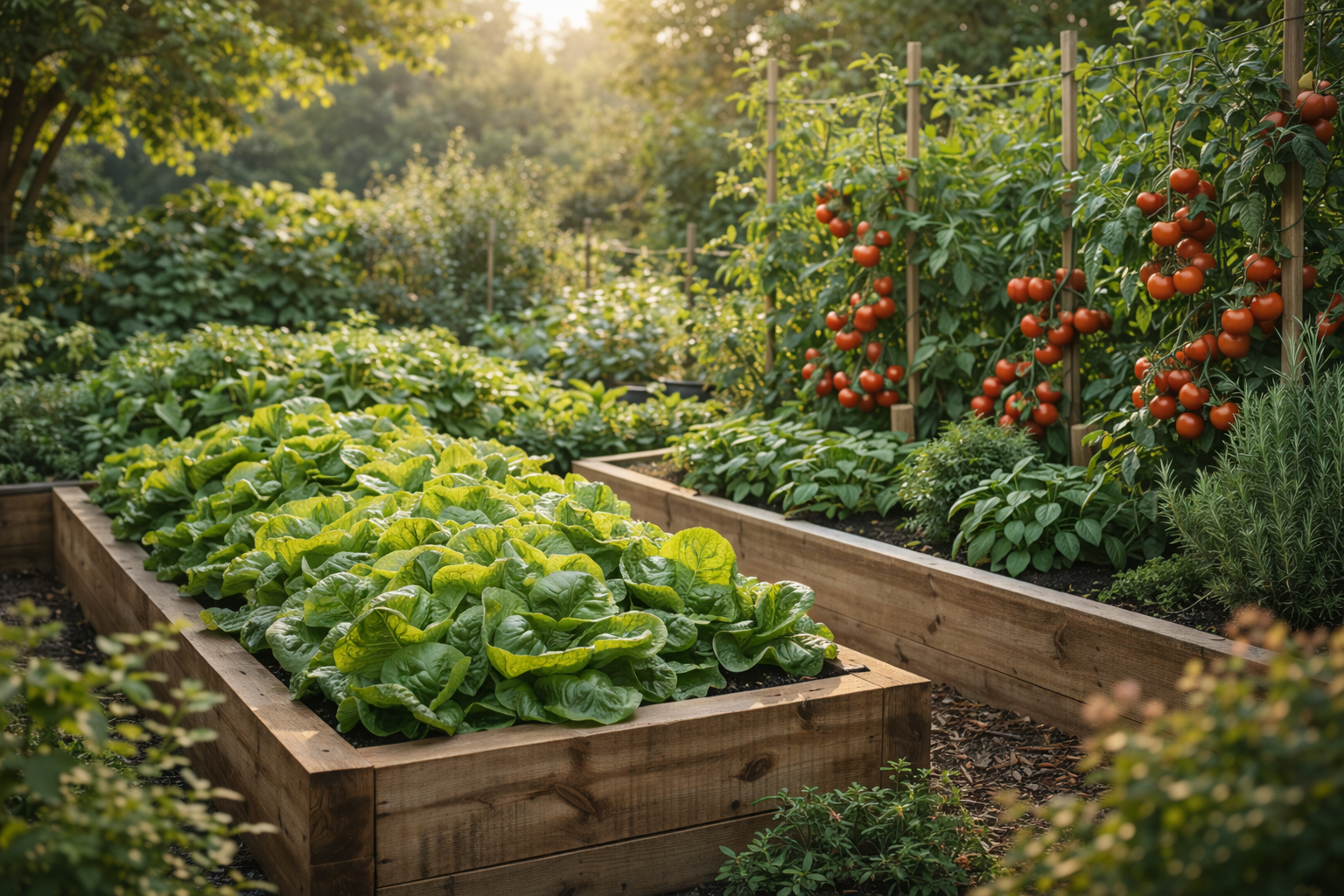
Raised Beds: Building wooden or metal frames and filling them with fresh soil is excellent for beginners. It gives you control over the soil quality, provides better drainage, and warms up faster in the spring.
Container Gardening: Perfect for balconies, patios, or anyone with limited space. Almost any vegetable can be grown in a pot as long as it’s large enough and has drainage holes.
Step 3: Improve Your Soil
You cannot succeed at learning how to grow vegetables at home without good soil. It is the foundation of a healthy garden.
Test Your Soil: If planting in-ground, consider a soil test to know its pH and nutrient levels.
Add Organic Matter: The best thing you can do for any soil is to add compost. Compost improves drainage in clay soils, helps retain moisture in sandy soils, and provides a slow-release source of nutrients for your plants. For containers, use a high-quality “potting mix” designed for vegetables, not garden soil, which is too heavy for pots.
Step 4: Pick the Right Vegetables for Beginners
Start small and choose vegetables that are known to be easy to grow. When learning how to grow vegetables at home, a common mistake is trying to plant everything in your first year, which can lead to being overwhelmed.
Top Beginner Choices:
Lettuce & Leafy Greens: Fast-growing and can be harvested continuously.
Radishes: Ready to harvest in as little as 30 days.
Green Beans (Bush variety): Productive and don’t require trellising.
Tomatoes (Cherry varieties): Often more prolific and forgiving than large slicing tomatoes.
Herbs: Basil, mint, and parsley are great additions that are easy to care for.
Step 5: Planting and Ongoing Care

Once your spot is ready and your seeds or transplants are picked out, it’s time to plant. Mastering the ongoing care is a crucial part of knowing how to grow vegetables at home successfully.
Watering: Vegetables need consistent moisture, usually about an inch of water per week. Water deeply at the base of the plant to encourage deep root growth, rather than shallow sprinkling every day.
Weeding: Weeds compete with your vegetables for water and nutrients. Pull them regularly when they are small so they don’t take over.
Final Thoughts
Learning how to grow vegetables at home is a journey of trial and error. Don’t get discouraged if some plants don’t make it; every gardener deals with pests, weather issues, or failed crops. The key is to start small, observe your garden daily, and enjoy the process.
Ready to get your hands dirty? Start planning your garden today.
For the right tools to help you get started, check out our Lawn & Garden category.